

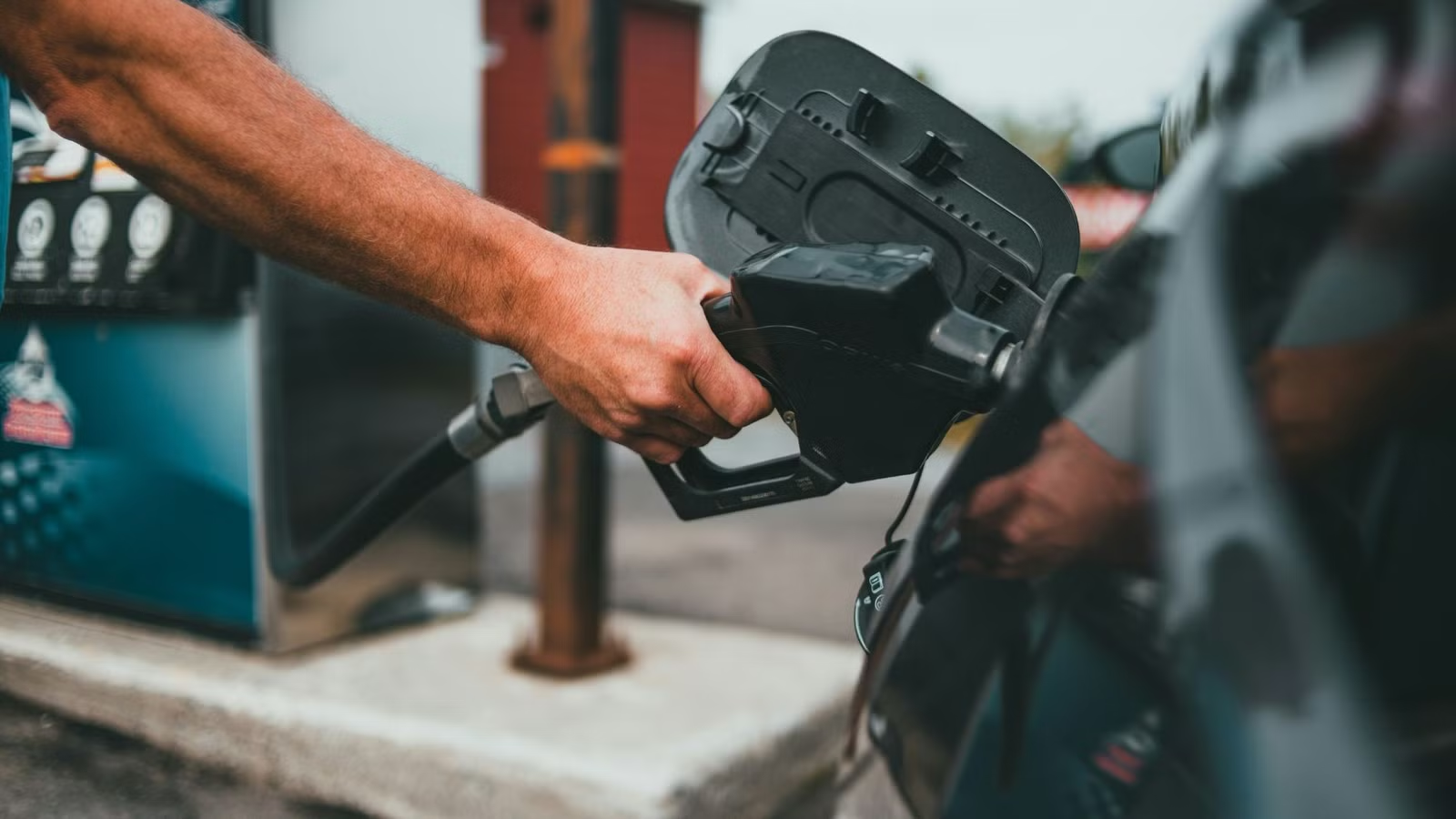
As governments keep rethinking their rules around vehicle emissions, buyers are rethinking what they want to drive.
New research from consulting firm EY shows shoppers around the world are cooling on EVs and giving combustion a second look.
Even people who were planning to go electric are now hitting pause and reconsidering their next move as policies shift.
Related
10 EVs That Depreciate The Most After 2 Years Of Ownership
You should avoid these cars new, but used examples are a bargain.
Half of car shoppers plan to choose gas in the next two years
Credit: Aston Martin
According to EY’s latest Mobility Consumer Index, about half of car shoppers worldwide now say their next purchase in the coming two years will be gas-powered. That’s a jump of 13 percentage points from last year, and most of that shift comes from people who were previously leaning toward an EV.
Credit: Toyota
The study shows EV interest has slipped hard, dropping 10 points to just 14 percent. Hybrid demand dipped too, but only a little—down five points to 16 percent.
And this shift isn’t just happening in the U.S., even though it’s strongest there. Preference for combustion jumped 12 points across the Americas, 11 points in Europe, and 10 points in the Asia-Pacific region.
Related
The EV brand drivers are steering clear of the most
The EV brand everyone talks about isn’t winning over as many drivers as you’d think.
Among the shoppers still eyeing an EV, a surprising number are now second-guessing themselves. EY says 36 percent are rethinking or delaying their plans because of recent geopolitical turmoil.
Changing policies are making buyers hesitant
Credit: Bertel King / How-To Geek
The reasons are easy to see. Recent policy changes—like the U.S. dropping EV tax incentives and the EU softening its mandates—are making buyers hesitant.
Automakers aren’t helping either, cutting the number of EV options available. Add in brands that overpromised on electric models and failed to deliver, and it’s no wonder shoppers are wary.
Credit: Mercedes-Benz
EY points to several factors behind the shift. “Consumers are weighing the realities of policy shifts, cost pressures and uneven charging infrastructure. The long-term trend appears to be a shift away from a purely electric (‘E-only’) approach toward a more diversified future for vehicle powertrains, with different vehicle technologies serving different customer needs,” said EY Global Aerospace, Defense and Mobility Leader Constantin M. Gall.
Credit: Tesla
Buyers’ worries about the vehicles themselves haven’t disappeared. According to EY, 29 percent said range anxiety is still a top concern, while 28 percent flagged charging infrastructure and another 28 percent pointed to battery replacement costs.
Range remains a real issue for many, even as more ultra-long-range EVs reach the market. Battery replacement costs also linger in buyers’ minds, though data shows EV packs are often lasting longer than expected.
Credit: General Motors
The study also shows that self-driving tech isn’t winning over buyers. Only 26 percent said they felt comfortable with Level 3 or higher automation.
Most shoppers—about 60 percent—are fine with lower levels of automation, but concerns about accidents, tech failures, and high costs are keeping them cautious.
Related
Forget SUVs—Americans are falling for a surprising favorite again
Buyers are coming back to a surprising favorite from their parents’ garages—no, it’s not station wagons.
It’s no surprise that car buyers are growing less enthusiastic about dealerships. Only 41 percent now prefer completing a purchase in person, down from 61 percent last year.
EV shoppers are the exception, still favoring in-person visits to get help with charging, tech features, and other questions unique to electric vehicles.
Sources: EY, CarBuzz
