

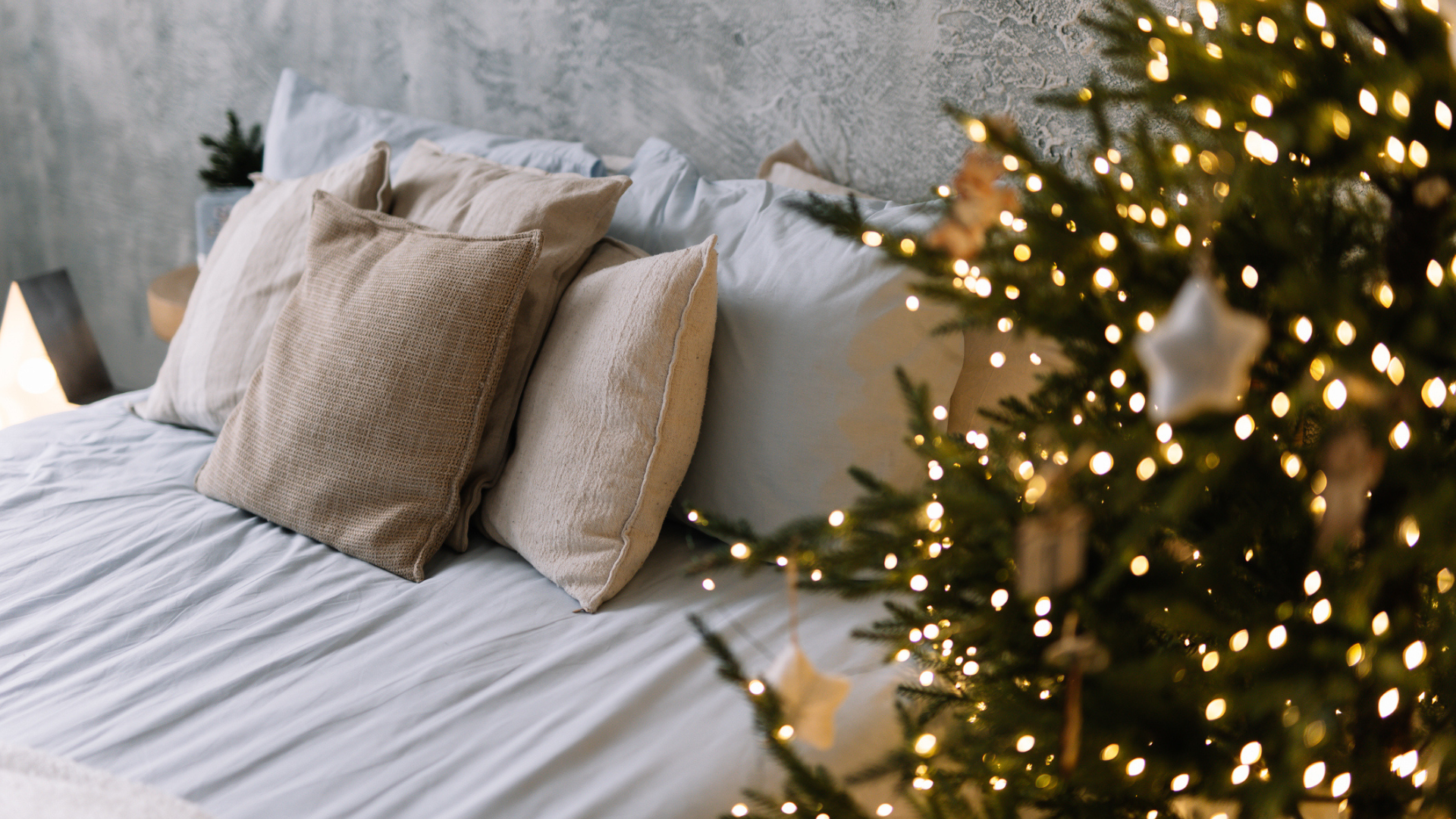
Christmas is just around the corner and you might be busy turning your home into a winter wonderland (and trying to get enough sleep during the socializing season). However, a common question we always encounter is whether it’s okay to fill your bedroom with twinkly Christmas decorations.
The answer isn’t a simple yes or no. So you don’t have to completely forgo the idea of redecorating your bedroom for Christmas, but rather lean into the concept of balance. So what can go in and what absolutely shouldn’t?
You may like
Christmas decorations ranked worst to best for your sleep
We looked into the 5 most popular decorations which often secure a spot in our festive decor plans and how they affect your sleep this holiday season. Let’s get right into it then:
1. Flashing rainbow-colored Christmas lights
(Image credit: Getty Images)
While twinkling lights may seem like a big part of getting your room Christmas-ready, they can potentially stop you from falling asleep fast and might be the reason why you keep waking up at night. This is why experts say that flashing bright lights are a strict ‘no’ in your bedroom.
“Even when we have our eyes closed, recent research has shown that ambient light in our bedrooms can keep us in a lighter stage of sleep, and disturb our metabolism the next day,” reveals Dr Sophie Bostock, a sleep expert at Bensons for Beds.
The same applies to bright dancing colors too, as these can trick your brain into thinking that it needs to stay active and alert.
2. The good ol’ Christmas tree
(Image credit: Getty Images)
A Christmas tree in your bedroom — to keep or not to keep? It’s definitely a valid debate. However, this depends on other factors like the type of tree you’re going for or whether you’re planning on putting bright lights on it.
According to Dr Bostock, it’s ideal to avoid putting up a Christmas tree in your bedroom if you’re prone to allergies. If it’s an absolute-must, a fake one is a great alternative.
You may like
Planning to add some lights? Opt for warmer static Christmas lights. These look pretty and, crucially, they won’t be too stimulating before bed.
Even so, Dr Bostock recommends turning them off at least 30 minutes before you go to bed. This makes it easier for your brain to relax and prepare for sleep. “If light comes in through the window, fit blackout blinds or wear an eye mask,” she adds.
3. Motion-activated decorations
(Image credit: Getty Images)
With modern technology comes modern problems and in the world of festive decor, these would be your moving, talking/singing carousels, snow globes and more. Just imagine the racket of a dancing Santa kicking off when you need to go to the bathroom at 3 am— it would be tricky to go back to sleep after that.
Setting up an ideal sleep environment is crucial to help your body and mind wind down after a long day. Christmas decorations featuring too much movement or sounds will stimulate your brain and risk a delay in the onset of sleep.
According to Joyce Huston, lead interior designer at Decorilla, hanging decorations also pose the risk of falling down in the middle of the night and temporarily disrupting your sleep — something you won’t be too happy about when waking up groggy the next day.
4. The ‘quiet’ ornaments
(Image credit: Shutterstock)
These are another favorite for bringing the Christmas spirit into your sleep haven. They do not typically interfere with your sleep as they quietly sit in a corner and ooze festive charm without flashing lights, colors or sounds.
However, Huston warns against adding too many Christmas elements on your nightstand and desk as this can lead to unnecessary clutter — and for a lot people that creates an environment that’s impossible to relax in.
“Those precious moments that make up the bedtime routine can be upended by the most trivial of problems — like trying to find a temporary home for your alarm clock, while a Christmas snow globe takes center stage on your nightstand,” reminds Huston. “It’s just not worth the hassle.”
Another factor to consider are allergens and dust. Christmas decorations are typically stored away in the garage most of the year.
They can gather dust and grime. Using these in your sleep space can aggravate existing allergies and make it harder to sleep well.
5. Festive bedding
(Image credit: Getty Images)
Incorporating subtle festive themed bedding in your sleep space is a clever and effective way of making it feel Christmassy.
“A nice warm cream bedding set, with touches of a soft red, like maroon or forest green, is a lovely way to pay homage to the holiday season. It’s also something that can be used year-round,” says interior expert Huston.
However, the designer stresses on the fact that while it’s tempting to go overboard, keeping it simple yet stylish is essential while adding in these decorative touches.
“Going overboard with additional fabrics in a bed, can trap more heat and disrupt sleep, especially if they’re made of heavier fabrics like wool,” she explains.
“My advice is to be very selective about what textiles are added, and keep it to one throw blanket and one or two decorative cushions.”
(Image credit: Getty Images)
How to decorate your room for Christmas and sleep well
Now that we’ve ranked the best elements to add in your bedroom this festive season, here are some tips on how to do it without compromising your sleep:
- Dust decorations that have been in storage: Deep cleaning your bed, washing your new festive bedding and wiping your Christmas soft decorations before setting it all up can avoid allergic reactions like a runny nose, itchy eyes and sneezing.
- Avoid clutter: Organizing and clearing up your bedroom, is instrumental to reduce nighttime anxiety, promote a sense of calm which ultimately can help you fall asleep faster. Adding too many small tabletop ornaments can create clutter and destroy the comfort and tranquility of your cozy sleep space.
- Don’t compromise on comfort: Even while selecting bedding, we would recommend to go for the top brands featured in our best bed sheets guide which offer limited edition festive designs, crafted from high-quality materials like organic cotton and silky-soft bamboo.
