

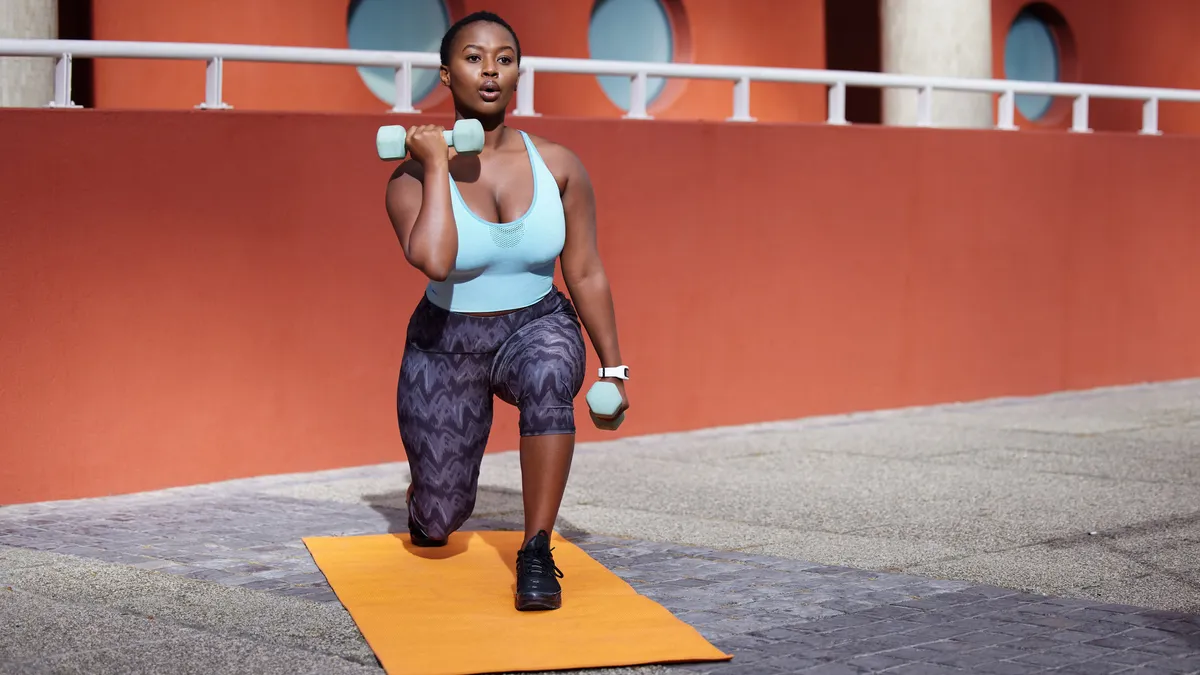
Adding some cardio to your workout regimen like running on a treadmill is great for your heart health. However, if your goal is losing weight and building some muscle, you’re better off focusing on strength training.
Strength training has the ability to give your metabolism a slight boost, melt fat and leave you fitter than ever — when done correctly. A recent Reddit thread discussion on the weight loss benefits of strength training showed that many people found more success with resistance training than cardio when preserving muscle mass while losing weight.
To learn more about the best way to do this, we spoke with fitness experts to get their thoughts and tips.
Don’t miss any of our unbiased tech content and lab-based reviews. Add CNET as a preferred Google source.
Strength training can help you burn more fat.
Which is best: Cardio or strength training?
There’s a constant back-and-forth argument about which is more efficient in reaching your ideal physique: cardio or strength training. According to New York City-based personal trainer Oscar Colon IV, cardio is ideal for burning more calories during a workout session — and it’s key to keeping your heart strong — but strength training affects your body differently.
“Strength training has a two-pronged effect because you burn calories during the workout and during the recovery and restoration of the muscle groups you worked,” Colon says.
As a result, you get more results for your effort.
It’s still a good idea to incorporate cardio and strength training into a well-balanced fitness plan so you can reap all the benefits. How much you do of one or the other may also depend on your current goals. If you’re training for your first marathon, cardio will be your main focus as you build endurance, whereas strength training will be a priority when you’re trying to get stronger or build muscle.
Building muscle helps you burn calories even at rest.
How muscles influence burning fat
As mentioned, strength training can help you burn more calories during and after your workout. This is thanks to the lean muscle you gain as a result of strength training. If your goal is to lose weight, having more lean muscle can help the process.
This also means that the more lean muscle you have, the higher your resting metabolic rate will be. Your resting metabolic rate, or RMR, refers to the total number of calories your body burns when it’s at rest. Biologically speaking, resting metabolism aids your organ functions, neurological functions, breathing and blood circulation.
Rachel MacPherson, an American Council of Exercise-certified personal trainer, performance specialist and Garage Gym Reviews expert, explains that muscle is metabolically active, meaning it burns calories even at rest. Although the effect is small, it’s significant and does add up over time.
“This also helps to counteract the decline of metabolism and muscle mass as you age, which can contribute to middle-age weight gain,” MacPherson says.
Strength training also has fat-burning benefits when you’re fresh off a workout. “Excess post-exercise oxygen consumption is the process of your body regulating itself back to homeostasis after a strenuous workout,” says Colon.
In other words, you’re still burning calories as you recover, because your body stays warm for a while as it cools down.
Studies have shown that beginners tend to put on muscle faster than those experienced with strength training.
How long does it take to put on muscle?
Now that you know that lean muscle is the key component in fat burning, you’re probably wondering how long it takes to build muscle. This will vary from person to person, as genetics, age, hormones, gender, diet and other factors play a role in how much muscle you put on and how quickly. “If you consistently train three to four times a week for 30 minutes each session, you should realistically start to see results in three to four weeks,” Colon says.
MacPherson says you can put on muscle mass each week, and doing a 12- to 16-week hypertrophy training program is ideal for seeing a significant amount of muscle gain. “You can expect upwards of five to 10 pounds of muscle gain during this time,” she says, adding, “As you become more advanced you will need to work harder for less gain but you will still see results.”
Why beginners may see results faster
That’s another interesting aspect of strength training: If you’re a beginner, you tend to have an advantage over someone more experienced when building muscle. This is what some people refer to as “newbie gains,” which refers to your body’s muscle-building response to lifting weights because it’s not used to this kind of stimulus. Research has shown that untrained individuals (those with minimal to no strength training experience) can put on muscle faster than someone who’s already experienced with strength training.
Strength training has excellent health benefits.
How gender impacts muscle growth speed and results
Generally speaking, men and women also have different results when building muscle mass.
“Men can build muscle mass much easier and faster than women due to testosterone, while women can still build substantial amounts of muscle but will never look as large or full as men unless they use anabolic steroids,” says MacPherson. “It’s vital that women lift enough volume and weight while also eating enough to support muscle gain.”
This means letting go of the old-school mentality of dieting and shrinking yourself; otherwise, it will inhibit your ability to build muscle.
How your diet influences muscle growth and weight loss
Besides a well-regimented workout plan, a diet that supports muscle-building is also essential. “In order to build muscle, you need to eat in a calorie surplus with plenty of protein,” MacPherson says, explaining that eating in a surplus will lead you to gain some body fat, which is normal and necessary to gain muscle. “You can lose it afterward, and it will be easier since your body has become better at burning calories due to increased muscle mass.”
Additional weight-lifting benefits
Strength training has other benefits besides helping you metabolize and get stronger. Colon says it’s also important for bone development and density. “Weight-bearing exercises put temporary stress on your bones, sending a message to bone-building cells to take action and rebuild bones stronger,” he says.
Another benefit tied to strength training is reducing your risk of injury by improving the strength, range of motion and mobility of your muscles, ligaments and tendons. “This can reinforce strength around major joints like your knees, hips and ankles to provide additional protection against injury,” Colon says.
Another plus is for your heart, because strength training is shown to help decrease blood pressure. You can also reduce the chances of type 2 diabetes, improve blood circulation and lower LDL (bad) cholesterol. Exercise has been shown to even have a positive effect on your mental health and resistance training has been found to reduce anxiety as well.
Read more: Best Home Exercise Equipment for 2025
The bottom line
It’s helpful to know the unique effects strength training has on your body as you establish a consistent exercise routine. Not only will you naturally burn more fat by having more muscle, but you’ll maintain strength as you age and improve other aspects of your life as well. If you don’t have access to a gym, you can start your exercise regimen at home and still get the same results, as long as you have the proper equipment.
Even if your goal isn’t weight loss or body recomposition, strength training provides many benefits that make it worth adding to your lifestyle. It’ll only improve your well-being in the long run.
When strength training for weight loss, it’s important to be consistent with your workouts while allowing ample time for recovery in between sessions. The CDC recommends that adults engage in muscle strengthening activity two days per week to maintain a healthy lifestyle.
Some strength training programs split up the workouts to target specific muscle groups each session instead of incorporating full-body exercises, in which case you may be able to increase your weekly sessions to three or four per week while still allowing for adequate recovery time. When in doubt, consult your medical provider or a certified personal trainer.
While a gym membership or home gym equipment can help amp up your strength training sessions, there are plenty of great weight loss workouts that you can do with just your body weight like lunges, squats and crunches.
You can also start with simple equipment like resistance bands or a pair of dumbbells if you don’t have the space or budget for a full home gym.
