

Highwings via Amazon / Elyse Betters Picaro / ZDNET
Follow ZDNET: Add us as a preferred source on Google.
ZDNET’s key takeaways
- Quick HDMI tweaks can noticeably improve picture and sound quality.
- Your TV’s settings and cables play a bigger role than you probably realize.
- A few checks can prevent HDMI problems and boost performance.
Connecting your devices to a TV with HDMI is easy enough. Plug your cable in, and you’re good to go, right? Not so fast, my friend.
Also: How to clear your TV cache (and put a stop to slow performance)
In reality, getting the best performance out of your TV takes a bit of effort. Over the years, I’ve picked up some handy HDMI tricks that make a real difference in picture and sound quality. Here’s what I do and why it matters.
1. Choose the right HDMI port
When you’re first setting up your TV and all your connected devices, whether that’s a PS5, a Blu-ray player, or a soundbar, you’re probably assuming that all the HDMI ports on the back are identical. Nothing in life is that simple.
Also: My Wi-Fi went out, but a forgotten TV feature kept me entertained for hours
Some ports support higher specs, like HDMI 2.1 for high refresh rates, and there’s likely one labeled for ARC/eARC (Audio Return Channel) for soundbars and receivers. You need to make sure you’re using the correct port for each device for maximum video and audio quality. I have a separate guide that explains how to tell HDMI ports apart, but here’s the TLDR.
- Identify high-bandwidth ports: Check your TV’s HDMI labels for terms like “4K 120Hz,” “8K,” or “HDMI 2.1.” If you don’t see any, they’re likely standard HDMI 2.0. When in doubt, check your user manual. HDMI 2.1 ports support higher resolutions and frame rates, so plug devices such as your PS5 or gaming PC into these, and you’ll unlock advanced features like VRR.
- Use the ARC/eARC port for audio: If you have a soundbar or home theater receiver, plug it into the HDMI port labeled “ARC” or “eARC.” I always use the eARC port on my TVs at home when connecting soundbars. That’s because eARC is the newer, higher-bandwidth version and supports uncompressed, high-bitrate audio like Dolby Atmos, DTS:X, and other lossless formats.
Reserve HDMI 2.0 ports for less demanding devices: Plug older devices, streaming sticks, and cable boxes into your standard HDMI 2.0 ports. This frees up the HDMI 2.1 ports for devices that need more bandwidth, such as 4K at 120Hz, 8K at 60Hz, VRR, ALLM, and eARC. And don’t worry about losing 4K HDR, because HDMI 2.0 supports 4K at 60Hz, HDR, and ARC.
Hisense / Elyse Betters Picaro / ZDNET
2. Use high-speed HDMI cables
Not only can choosing the right port make or break your HDMI experience, but so can the HDMI cables.
If you’re still using a decade-old cable, it’s probably not handling your 4K HDR streams as well as a newer one can. The good news is that you don’t need expensive cables, just certified, high-quality ones with the right specs. Check the packaging or label on your cable.
Also: 11 secret Fire TV remote shortcuts to unlock new features and menu settings
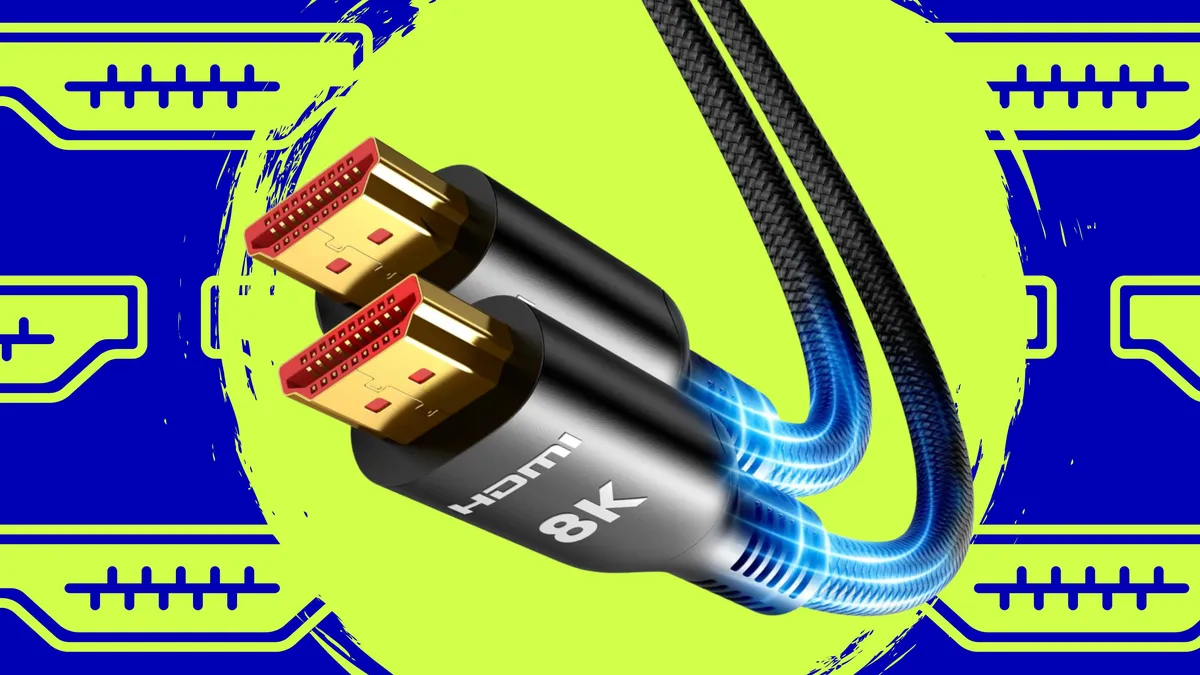
Labels like “high speed,” “premium high speed,” or “ultra high speed” indicate its bandwidth. For demanding devices such as gaming consoles and Blu-ray players, I always use “ultra high-speed” HDMI cables (48Gbps), which are rated for HDMI 2.1 features like 4K, 8K, HDR, and Dolby Vision. In my experience, these cables prevent issues such as flickering and no signal.
If your devices only support up to 4K at 60Hz, a “premium high-speed” HDMI cable (18Gbps, HDMI 2.0) is perfectly fine. Again, just avoid really old or thin cables. Early HDMI cables (HDMI 1.4 or older) top out at 1080p or 4K30 and may cause output drops.
One last tip: Try to keep your cables under 10 feet (3 meters) for 4K. If you need a longer run, use an optical HDMI cable.
Highwings via Amazon / Elyse Betters Picaro / ZDNET
3. Enable ‘enhanced’ HDMI features
Many TVs have individual settings for each HDMI input. Out of the box, they might keep these settings at default, or lower bandwidth, for compatibility. If you suspect you’re not getting HDR or deep colors, check to see what’s enabled for that port.
Also: I changed 12 settings on my Apple TV to instantly make the system run like new again
The first thing you’ll want to do is look for your TV’s “enhanced” input settings. You can also check your TV’s manual to find them.
Every brand calls it something different. On LG TVs, for instance, there is “HDMI Ultra HD Deep Color.” Samsung TVs have an “Input Signal Plus” or an “HDMI UHD Color” toggle. Meanwhile, Sony has an “Enhanced Format.” Either way, dig into your TV’s settings menu, typically found under Picture settings or External Input settings, to find these enhanced options.
You’ll want to enable them for any input where you’ve connected a device that supports 4K HDR or a high refresh rate.
Samsung / Elyse Betters Picaro / ZDNET
4. Choose a picture mode for inputs
Getting the best picture quality isn’t just about HDR and UHD deep colors; it also comes down to picture modes. Newer TVs often offer modes that may be labeled as Game, PC, Cinema, Filmmaker, Sports, Vivid, and more. Selecting the right mode can significantly enhance your viewing experience. You may want to tailor the picture mode to what you’re doing or the device you’re using.
Also: I used secret codes to unlock my Roku TV’s hidden settings and menu screens – here’s how
Samsung TVs have a Game mode, for instance, which you might want to enable when using your Xbox or PlayStation. It cuts down on input lag by turning off heavy video processing, making gameplay faster and more responsive. TCL TVs have a Movie picture mode (or Filmmaker mode on newer models), which gives you more natural and accurate colors designed to preserve the filmmaker’s intent.
If you see modes like Vivid or Sports, they crank up brightness and contrast and often use motion smoothing (or “soap opera effect”). You might not want to use these every day, but they’re easy enough to enable or disable as you wish. Most TVs remember the picture mode per HDMI input, allowing you to keep your streaming device in Filmmaker mode and your console in Game mode.
You can find your TV’s picture modes in settings, usually under Picture or Display and Sound. Check your TV’s manual to be sure.
Samsung / Elyse Betters Picaro / ZDNET
5. Turn on features like ALLM and VRR
If you’re into gaming, two big acronyms to know are ALLM (Auto Low Latency Mode) and VRR (Variable Refresh Rate).
ALLM lets your TV automatically activate Game Mode when a console is playing. You won’t have to manually toggle it every time you switch between gaming and Netflix, as your TV will handle it for you. Check your TV’s manual to see if it supports ALLM (many new models do) and where to enable it. On Xbox consoles, there’s an option called “Allow auto low-latency mode.”
Also: How to reset your Roku TV: 4 easy methods (and why you shouldn’t wait to do them)
As for VRR, it matches the TV’s refresh rate to the game’s frame rate in real-time, eliminating screen tearing and stutter.
To use VRR, your TV must support it (look for terms like FreeSync, G-Sync, or VRR). Go into your TV’s picture or general settings and ensure that VRR is enabled for the HDMI port used by your console. On the console side, enable VRR in video settings (both Xbox and PS5 have toggles). Once set, your TV will dynamically adjust its refresh rate to match the game’s output.
Elyse Betters Picaro / ZDNET
6. Use ARC/eARC for audio
Now that your TV’s picture quality is optimized, let’s focus on audio.
I mentioned this earlier, but if your TV has an HDMI port labeled “ARC” or “eARC,” plug your soundbar into that port. This allows the TV to pass all its audio, from any source or streaming app, to the soundbar.
Also: Every Roku user should know these 20+ hidden menus and shortcuts for the best experience
ARC works fine for basic, compressed formats like Dolby Digital, but eARC is the upgraded version, offering much more bandwidth and support for uncompressed surround sound, lossless formats, and full-quality Dolby Atmos and DTS:X, along with built-in lip-sync correction. ARC uses standard HDMI cables, while eARC works best with ultra high-speed HDMI 2.1 cables.
If you just want simple audio, ARC is sufficient, but if you’re after the best and most immersive sound, eARC is the way to go.
Silkland via Amazon / Elyse Betters Picaro / ZDNET
7. Keep your ports and cables clean
Please keep your HDMI ports clean and take care of your cables. Over time, dust and grime can accumulate in your TV’s ports or on the cable connectors, which can lead to poor contact. A loose or dirty HDMI connection might cause flickering, signal dropouts, or that dreaded “no signal” message. Make it a habit to check and clean your setup, perhaps twice a year.
Also: I changed 10 settings on my Fire TV to significantly improve the performance
While cleaning, turn off your TV and any connected devices, then unplug them from the power outlet. You don’t want any live electricity when fiddling with ports. Also, when unplugging HDMI cables from the TV and devices, don’t yank them out. Grip the connector and pull straight out. Avoid wiggling, as this can wear out the port over time.
Use a can of compressed air to blow out any dust from the HDMI ports. A clean, soft brush, like a small paintbrush, can help dislodge dust, too. Never stick anything metallic into the port. If you see visible gunk on your HDMI cable’s connectors, wipe the plug gently with a lint-free cloth. For stubborn dirt, dampen a cotton swab with a bit of isopropyl alcohol. Let dry before reconnecting.
You might also take this opportunity to do a little cable management. Use velcro ties or clips to route cables neatly. Avoid sharply bending or crimping HDMI cords. They’re durable, but any cable can fail if pinched too hard. If your TV is wall-mounted or cables do bend sharply, you can always use a right-angle HDMI adapter or a swivel head to reduce strain.
Elyse Betters Picaro / ZDNET
8. Update your TV and devices
Last but not least, don’t underestimate the importance of firmware updates. Your TV and HDMI-connected devices should always be running the latest software to ensure you’re getting the best performance and to address any random quirks.
Also: These Cyber Monday TV deals are still live: Save up to $2,500 off LG, Samsung, Sony, TCL, & more
Most smart TVs can automatically update via the internet, but go into your TV’s settings menu and look for a Software Update or Firmware Update option to check and download the latest patches. I make a habit of checking every couple of months. New updates can squash bugs and even add new features or format support. You’ll also want to update your consoles and streaming devices.
Samsung / Elyse Betters Picaro / ZDNET
Does it really matter which HDMI port I use?
Yes. Some HDMI ports support higher bandwidth (like HDMI 2.1 for 4K120, VRR, or 8K), and one is usually labeled ARC/eARC for audio equipment. Plug devices that require the most performance into your TV’s highest-specced ports.
Do I really need newer HDMI cables?
Yes. If you have a really old cable, it may not be able to handle 4K HDR or high refresh rates. Look for certified “ultra high-speed” HDMI cables (48Gbps, HDMI 2.1) or “premium high-speed” HDMI cables (18Gbps, HDMI 2.0).
Show more
